At this point this is sort of a recap, but here is a playlist of the NASA New Horizons “Pluto in a Minute” series hosted by Amy Shira Teitel. Her energy is infectious and I would love to see NASA continue to employ her as the public envoy of ALL future endeavors. Enjoy!
Category Archives: In the News
First flight for Blue Origin’s “New Shepard” space vehicle.
On April 29, 2015 Blue Origin successfully completed the first developmental test flight of its “New Shepard” space vehicle. After accelerating through Mach 3 and reaching an altitude of 307,000 feet, the crew capsule (uncrewed in this test) was deployed and successfully parachuted to the ground.
In fact, if New Shepard had been a traditional expendable vehicle, this would have been a flawless first test flight. Of course one of our goals is reusability, and unfortunately we didn’t get to recover the propulsion module because we lost pressure in our hydraulic system on descent.
You can sign up to receive early access to reservations, ticket and pricing info when it becomes available. If anyone wants to “gift” me a ride, I’d be OK with that. 😉
Blue Origins is the private space venture backed by Amazon.com billionaire Jeff Bezos.
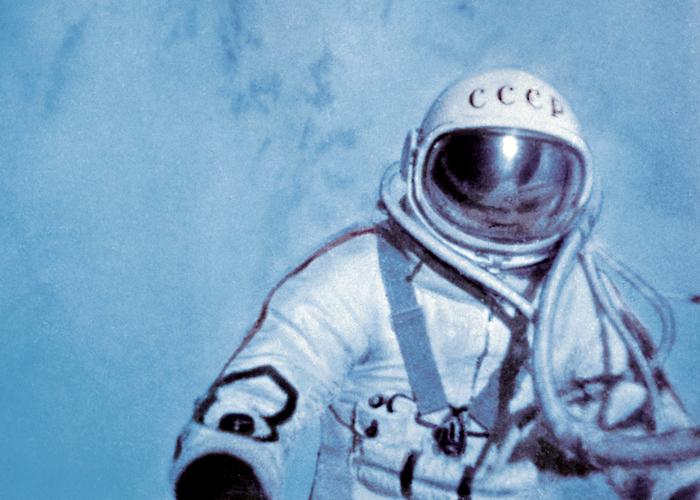
BBC News explores the first human space-walk
Here is a GREAT media-rich article exploring the first ever human space-walk by Alexei Leonov in March of 1965. Read the brief synopsis below and then click through to the article for details. I had no idea.
News of the first ever spacewalk on 18 March 1965 was received with shock and delight. It took place against a battle for supremacy in space between the US and the USSR.
The Voskhod 2 mission was hailed as a propaganda coup for the Soviet Union and as a blow to American pride.
But this triumphant narrative bore little resemblance to what actually took place behind the scenes.
Leonov, now 80, has given a rare interview to the BBC in which he talks about the series of emergencies that made the trek back to Earth worthy of any Hollywood movie.
Minutes after he stepped into space, Leonov realised his suit had inflated like a balloon, preventing him from getting back inside.
Later on, the cosmonauts narrowly avoided being obliterated in a huge fireball when oxygen levels soared inside the craft.
And on the way back to Earth, the crew was exposed to enormous G-forces, landing hundreds of kilometres off target in a remote corner of Siberia populated by wolves and bears.
Afterwards, the Soviet authorities revealed nothing about the problems. For years, few people knew the truth.
This was not unusual. America’s successes and failures took place in the full glare of public attention. But the Soviets were obsessive about controlling the message through secrecy and censorship.
Harvard and the Smithsonian team up to crowd-source a century of astronomical history
I recently got a chance to interview and profile the people behind a collaboration between Smithsonian and the Harvard College Observatory who are crowdsourcing the transcription of logbooks for thousands of photographic plates. It’s a massive undertaking that will give scientists access to a hundred years of astronomical data. – Simon
Read the article: Harvard and the Smithsonian teamed up to crowdsource a century of astronomical history
Brought to our attention by Simon Owens – www.simonowens.net, @simonowens